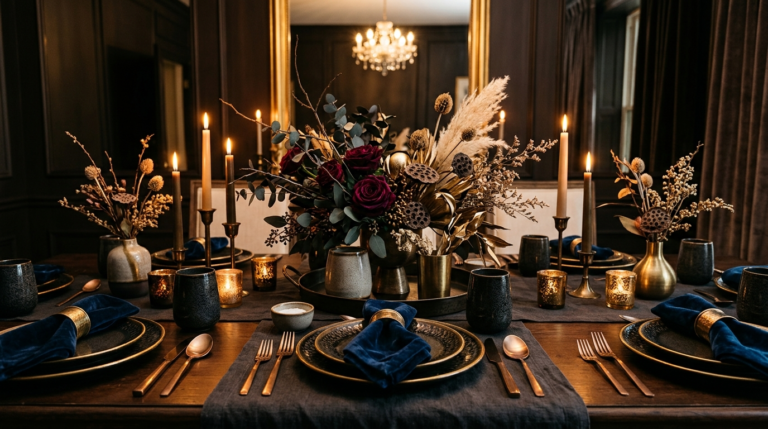
Gathering around a dinner table is one of the oldest, most comforting human rituals. It is a space where nourishing food meets rich conversation, and the pressure of the outside world melts away. To foster this sense of deep connection, the environment must feel inherently welcoming, warm, and grounded. This is where the magic of a cozy rustic tablescape shines. Moving away from stiff, formal settings, a rustic tablescape embraces the honest beauty of raw textures, natural materials, and imperfect elements. This narrative journey will guide you through the art of table styling, helping you layer woods, linens, and vintage accessories to create an unforgettable dining experience that hugs your guests with comfort.
The Foundation: The Soul of a Raw Wood Table
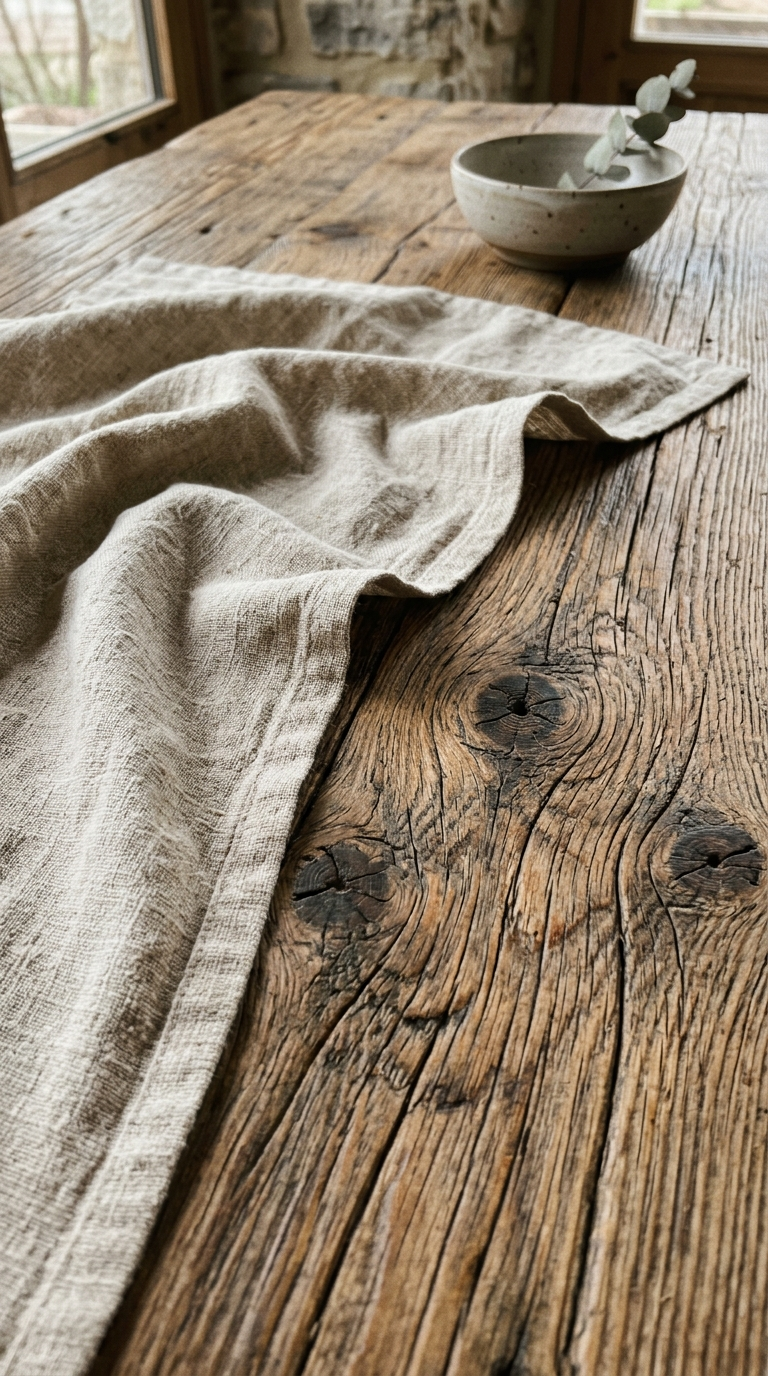
Every beautiful tablescape begins with a strong foundation, and in a cozy rustic design, that foundation is almost always a beautiful, unadorned wooden dining table. Whether it is a heavy farm table made of reclaimed barn wood, a rich oak piece with visible knots, or a distressed pine table with a storied history, the wood itself provides immediate warmth and character. In this style of decorating, we actively avoid heavy, solid tablecloths that hide the beautiful wood grain. Instead, leave the table bare to let its natural texture shine. If you want to soften the center, lay a simple table runner down the middle. Opt for material with a loose, tactile weave, such as a rough-hemmed linen runner in oatmeal, a strip of natural jute, or a soft cotton cheesecloth that wrinkles elegantly, providing a soft background for the layers to come.
Layering Textures with Artisanal Dinnerware
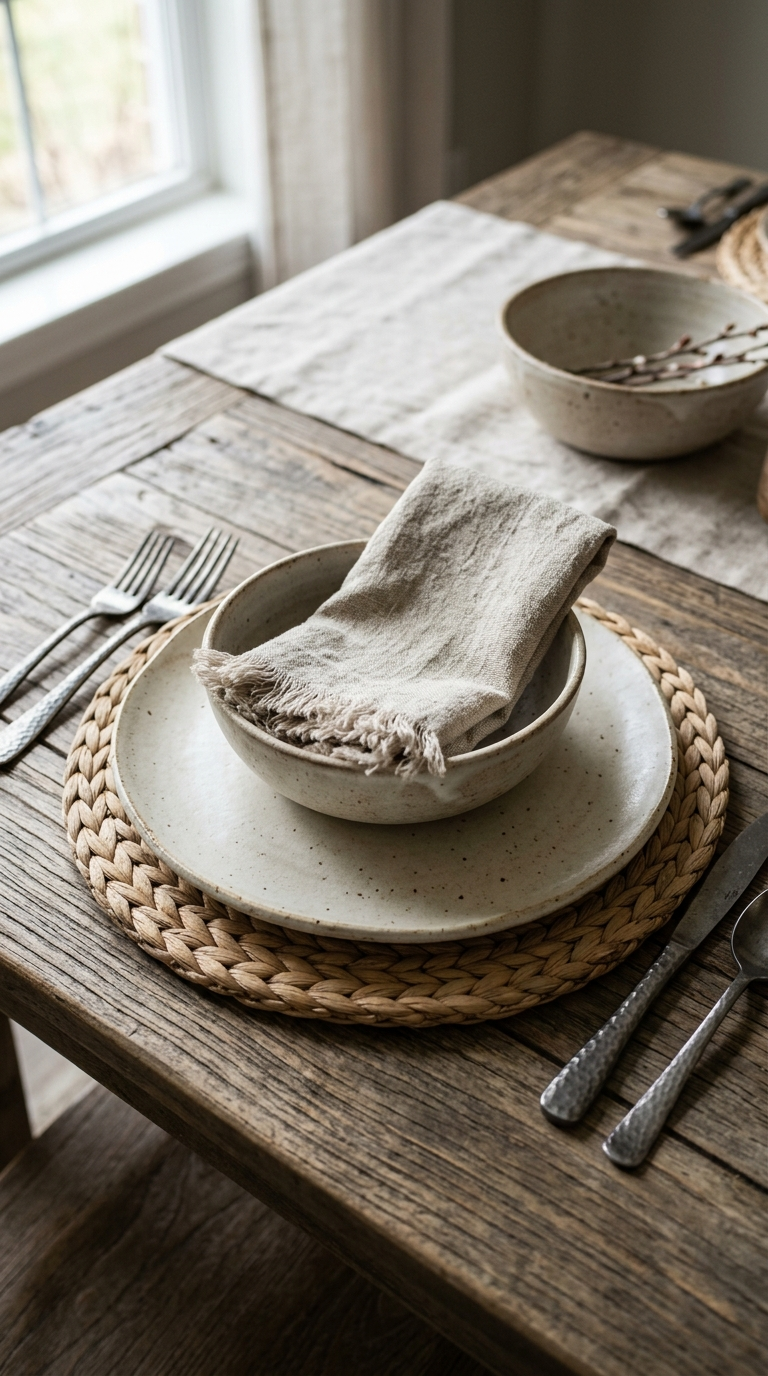
Once your foundation is laid, it is time to build your placesettings using materials that feel substantial and handmade. Ditch the delicate, high-gloss porcelain in favor of stoneware or ironstone ceramics. Artisanal plates with slightly irregular edges, subtle speckling, and matte or semi-gloss glazes in soft earthy tones—like cream, sage green, sandy taupe, or soft slate gray—are perfect for a cozy rustic look. To stack your setting beautifully, start with a large charger plate made of woven seagrass, water hyacinth, or a thick slice of natural wood with the bark intact. Place your main dinner plate on top, followed by a matching salad bowl. This heavy stacking technique creates a wonderful sense of abundance and tactile richness at every single seat.
The Softness of Natural Linens and Antique Flatware
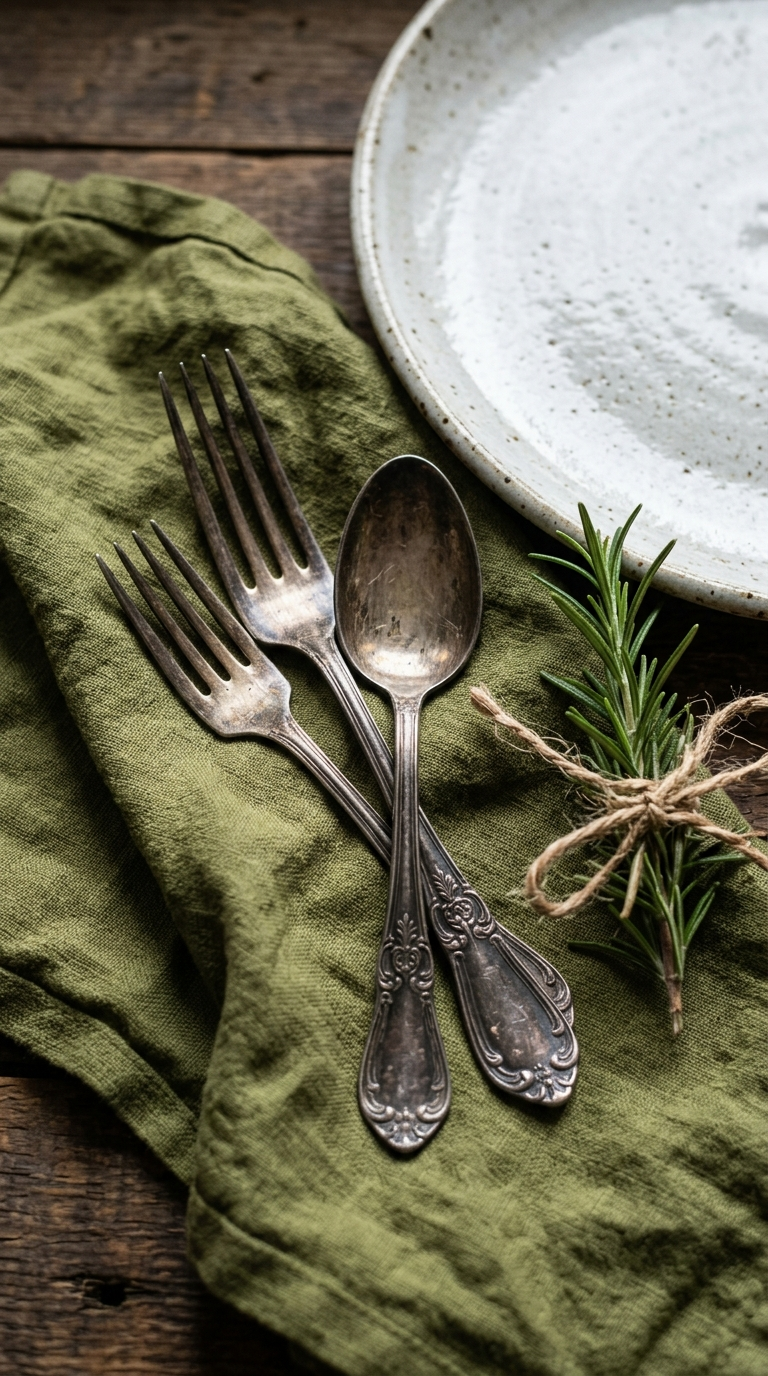
To balance the hard textures of wood and ceramic, you must introduce soft, luxurious textiles through your napkins. Choose oversized napkins made of pure, pre-washed linen or soft cotton duck. Rather than folding them into rigid, sharp triangles, embrace an effortless look. Tie a loose, casual knot in the middle of the napkin and lay it across the center of the plate, or secure it gently with a piece of rough jute twine and a tiny sprig of fresh rosemary or a single dried lavender stem. For flatware, look away from shiny, modern stainless steel. Vintage flatware with a beautiful, dark patina—such as antique silver plate, matte tumbled bronze, or forged black iron forks and knives—adds a layer of historical grounding and authentic charm that makes the setting feel collected over time.
Crafting a Living Centerpiece: Flora and Found Elements
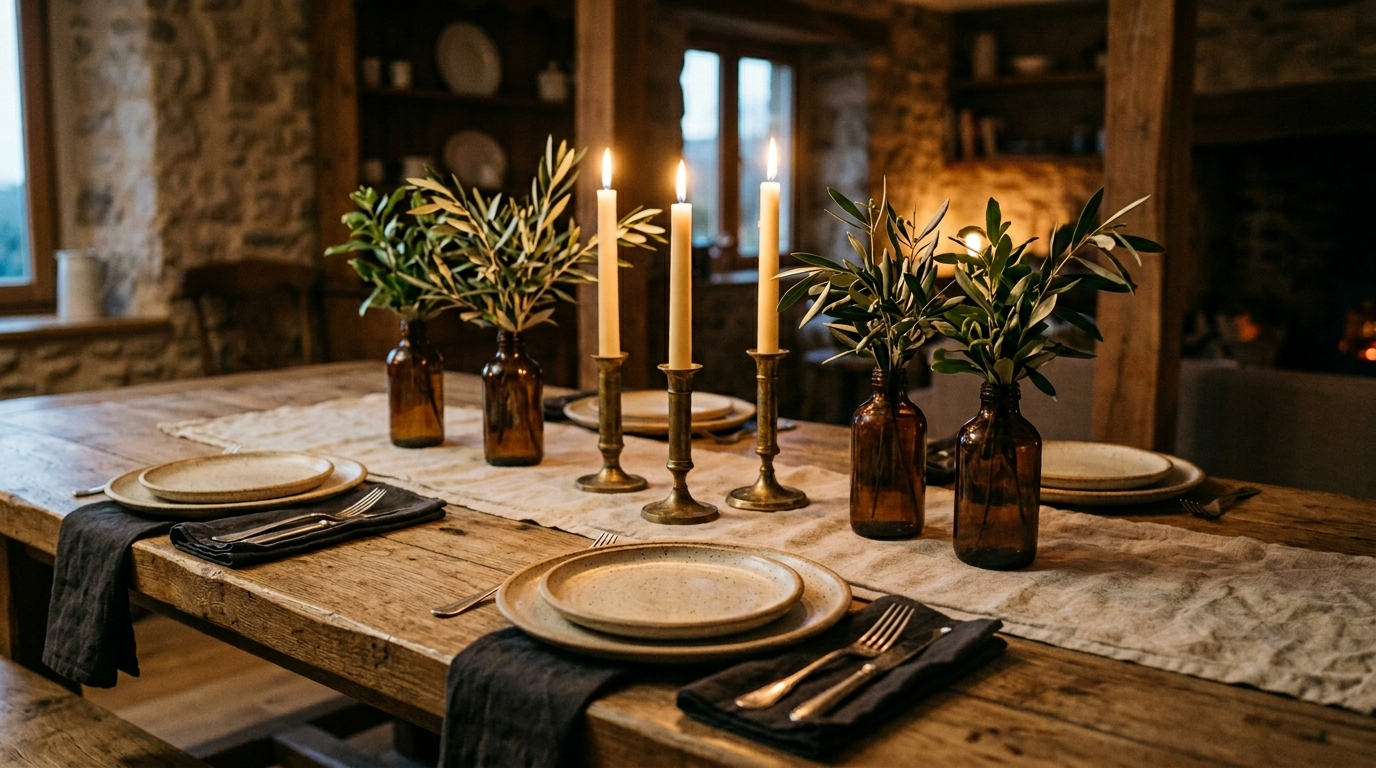
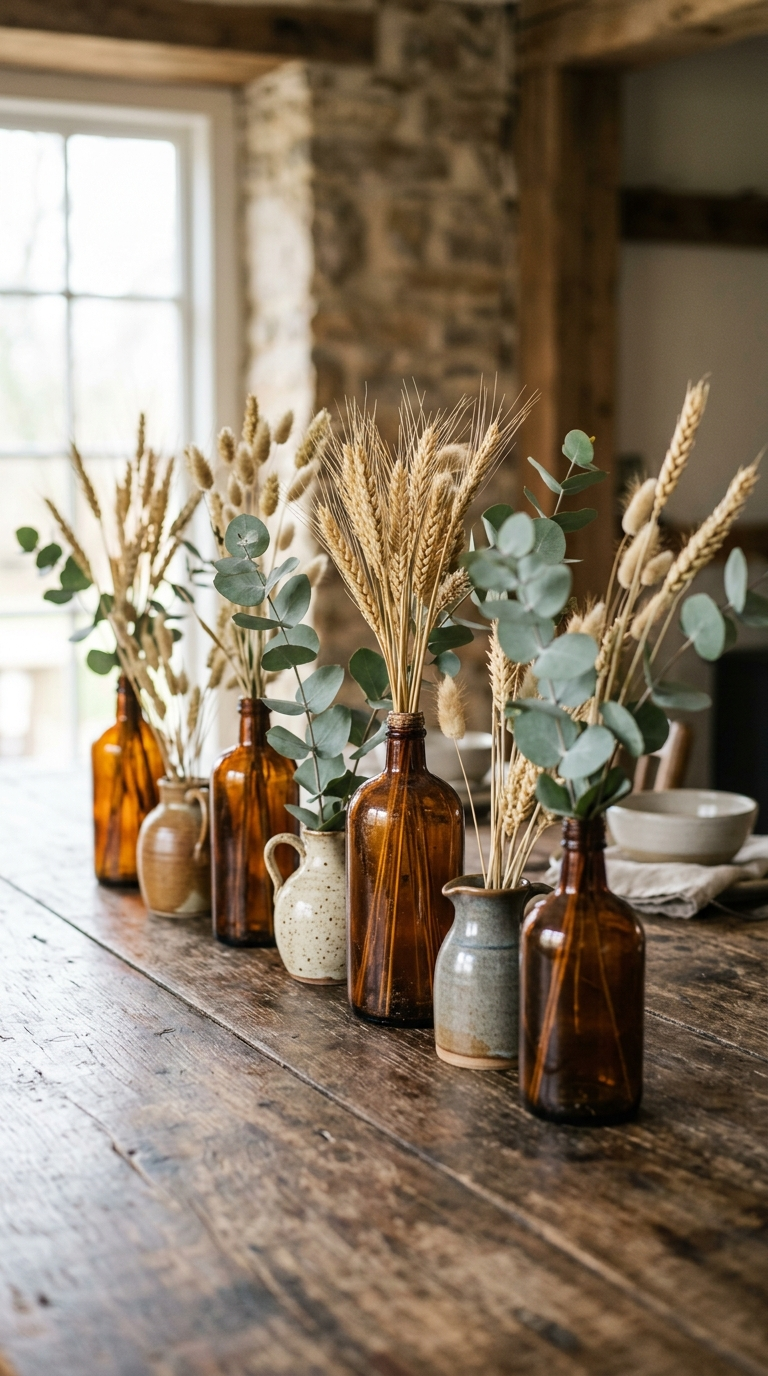
The centerpiece of a cozy rustic table should never feel stiff or overly arranged by a commercial florist. It should look like an extension of the natural world outside your window. Instead of one massive, restrictive floral arrangement, opt for a loose, scattered collection of vessels running down the length of your runner. Use a mix of vintage amber glass bottles, small stoneware crocks, and rustic ceramic jugs. Fill them with an assortment of textured greenery and wild-looking flora: eucalyptus branches, olive stems, dried wheat stalks, thistles, and moody seasonal blooms. Keep the heights varied but low enough so that guests can easily see across the table to converse. This long, continuous garden down the table adds incredible life, movement, and organic texture to the dining environment.
The Glow of Candlelight and Amber Glassware
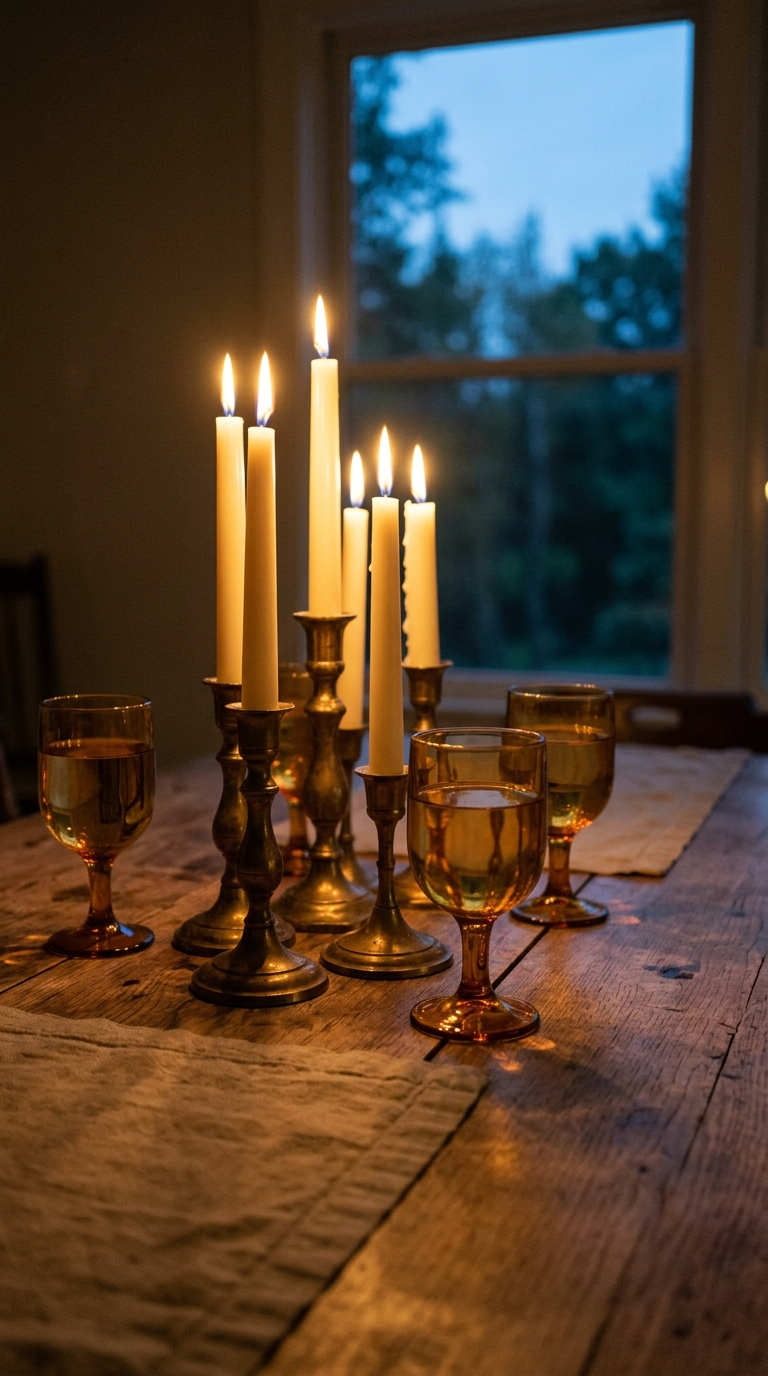
As day turns to evening, lighting becomes the ultimate element in creating a warm, magical atmosphere. In a cozy rustic setting, candlelight is absolutely essential. Interweave your collection of centerpiece vases with an array of candles. Use tall, beeswax taper candles in warm cream, terracotta, or honey colors, held by antique brass or mismatched cast iron candlesticks. Supplement these with small glass votives holding tea lights to scatter flickering glimmers right down at the table surface. Complete the look with your glassware. Alongside simple, heavy-bottomed water tumblers, introduce wine glasses or goblets crafted from tinted amber, smoky gray, or olive green glass. The colored glass catches the warm, dancing candlelight beautifully, casting a soft, golden, and incredibly nostalgic glow over the entire dinner party.
Conclusion: Creating Space for Memories
A beautifully styled rustic tablescape is ultimately an act of hospitality. By thoughtfully layering raw wood tables, heavy artisanal stoneware, soft crumpled linens, wild organic greenery, and an abundance of warm, flickering candlelight, you create far more than just a place to eat. You create an emotional experience. You build a sanctuary where time slows down, where the textures feel real and comforting, and where guests immediately know they are welcome to relax, stay late, and create memories that endure long after the last candle is blown out. Gather your natural elements, set your table with love, and enjoy the beauty of slow, rustic dining.
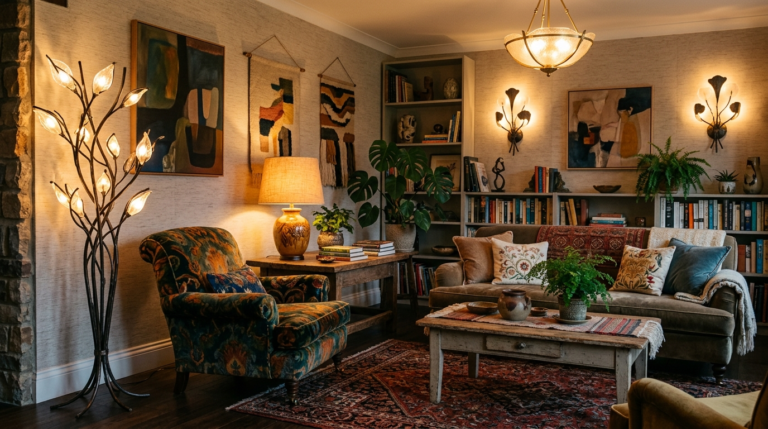
Poor lighting can make even the most beautiful rooms feel flat and unwelcoming. Learn the seven most common lighting mistakes homeowners make and discover practical, beautiful solutions that will transform how your home looks and feels every single day.
Discover the most captivating summer lighting trends. From Japandi aesthetics to multiple shades of green, transform your space into a bright, inviting oasis.
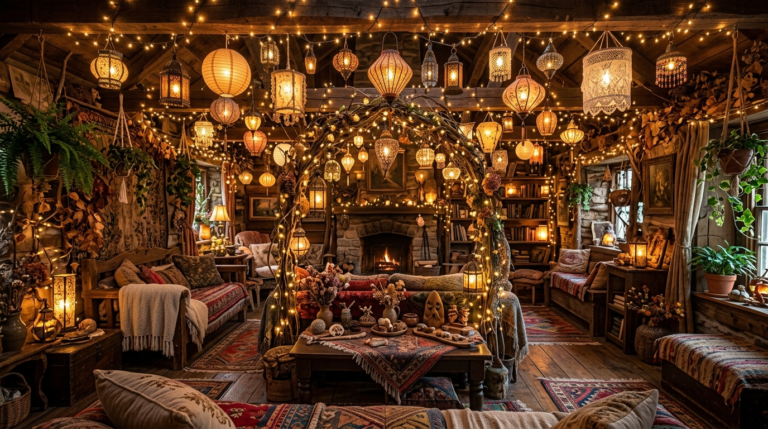
Unleash your creativity with these whimsical and imaginative DIY lighting and decor projects. From magical light installations to unique styling ideas, discover how to add personal magic to every room.
Discover the emerging table styling trends for 2026 that blend luxury, nature, and personal expression. From biophilic accents to mixed metals and textural layering, learn how to create dining spaces that feel current, beautiful, and deeply inviting.
Explore the sophisticated world of wall styling. Learn how layering beautiful mirrors and elegant decor can instantly elevate the ambiance of any living space.
Discover 18 brilliant lighting ideas that will transform your home into a warm, inviting sanctuary. From statement chandeliers to clever task lighting, find inspiration for every room and style to enhance your decor and create perfect ambiance.